
Human adaptations to arid and high-altitude regions of eastern Central Asia in the Late Pleistocene and Early Holocene

Funding

Russian Science Foundation Project #19-78-10112
Awardees
Arina Khatsenovich – Principal Investigator
Evgeny Rybin (archaeology), Alexei Klementiev (paleontology), Snezhana Zhilich (palynology) – Co-Investigators
Daria Marchenko (spatial analysis), Irina Vishnevsaya (isotopes, ETR) Evgeny Mikheev (geology), Tatiana Shevchenko (microwear analysis).
Research précis
The results of this project will be useful not only to archaeologists, but also paleogeographers, paleoclimatologists, and geologists. The results will enhance understanding of the mechanisms of cultural adaptation and human responses to arid high-altitude conditions, reconstructing the climate, and determining the ecological niches and migrations of various species of mammals, including humans. The isotope map which will be compiled as part of this project will be used as a database for further research in paleoclimatology and paleogeography, and is currently completely absent. Identifying specific types of adaptation in comparison with the cultural remains of Paleolithic populations of the middle altitude Khangai Mountains in central Mongolia will allow us to understand the driving forces behind the evolution of human culture — where the cultural suite changed more quickly, whether conservatism of lithic industries and settlement models was a consequence of an extreme or temperate climate, as well as hominin subsistence strategies that changed with climatic and landscape conditions – the use of animal resources and the character of mobility systems.
Abstract
This project aims to reconstruct Late Pleistocene-Early Holocene paleoclimatic conditions in extreme Central Asian landscapes, identify the settlement/abandonment of these territories by migrating paleo-populations, and elucidate their adaptational responses to changing landscapes and climate. This project involves the reconstruction of natural conditions of human existence in the Pleistocene and Early Holocene; identification of fauna in archaeological complexes and shifts within those biotic communities, the ecological niches occupied by these animals, their interregional migrations and seasonality of mortality; reconstruction of hunting and settlement strategies of ancient humans during various stages of the Paleolithic – Mesolithic through the determination of species composition and seasonality of the mortality of mammals and birds; the creation of an interregional chronostratigraphic model for the settlement of Mongolia throughout the Paleolithic-Mesolithic, based on Optically Stimulated Luminescence and radiocarbon dating, segmentation and correlation of stratigraphic subdivisions, the typology of lithic industries; reconstruction of how quickly the human cultural set was changing in temperate climates and arid highlands: extreme or temperate climatic conditions were the determinant for a flexible or conservative cultural suite.
Project goals
– Reconstruction of Pleistocene and early Holocene environmental conditions based on a data set obtained from archaeological sites using modern excavation methods; dating deposits with Optically Stimulated Luminescence (OSL) and reconstruction of the palynological profile from those sediments.
– Determination of the archaeological complexes’ faunal composition and their shifts, ecological niches occupied by these animals, their interregional migrations and seasonality of death through the classical methods of zooarchaeology and ZooMS analysis, and analysis of stable isotopes.
– Reconstruction of Paleolithic and Mesolithic hunting and settlement strategies through the determination of species composition and seasonality of mammals’ and birds’ death.
– Creation of an inter-regional chronostratigraphic model of Mongolian settlement throughout the Paleolithic and Mesolithic periods based on OSL and radiocarbon dating, segmentation and correlation of stratigraphic subdivisions, and typology of stone artifacts.
– Reconstruction of rates of culture change in the temperate climate conditions of mid-elevation mountains and arid highlands: whether extreme or moderate climatic conditions were a determinant for a flexible or conservative cultural repertoire.
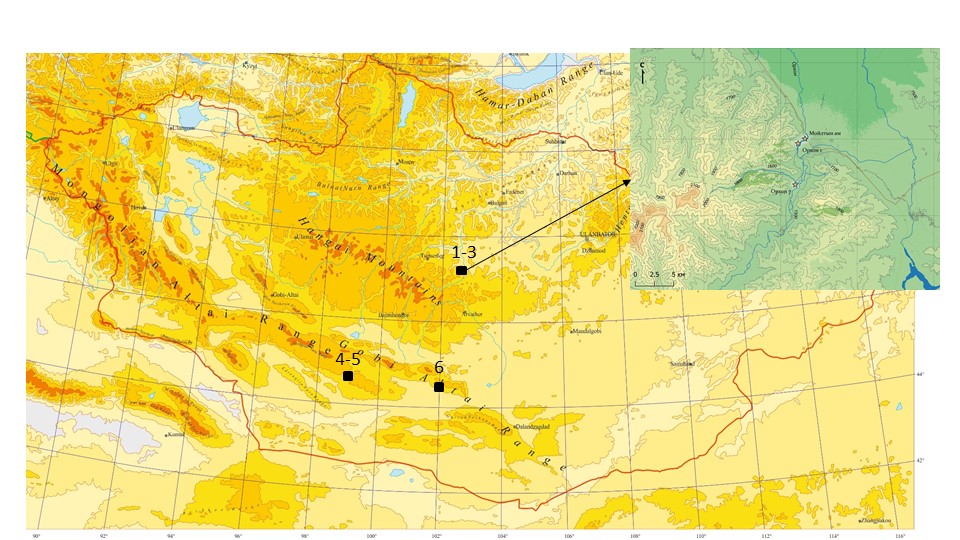
1-3 – Moiltyn-am, Orkhon-1, Orkhon-7; 4-5 – Chikhen Agui Rockshelter, Chikhen-2; 6 – Tsagaan Agui Cave
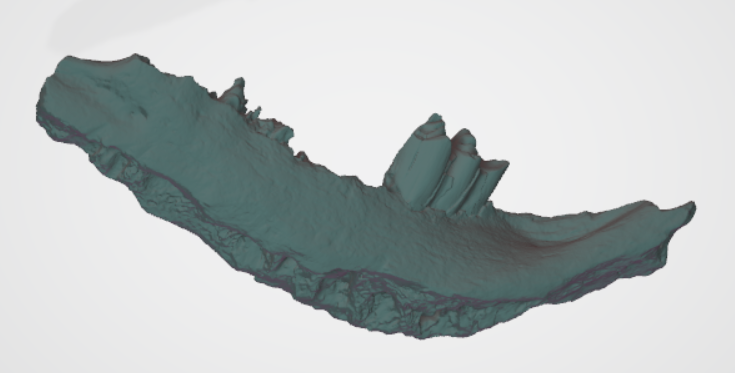
Bos/Poephagus baikalensis (Baikal yak) mandible
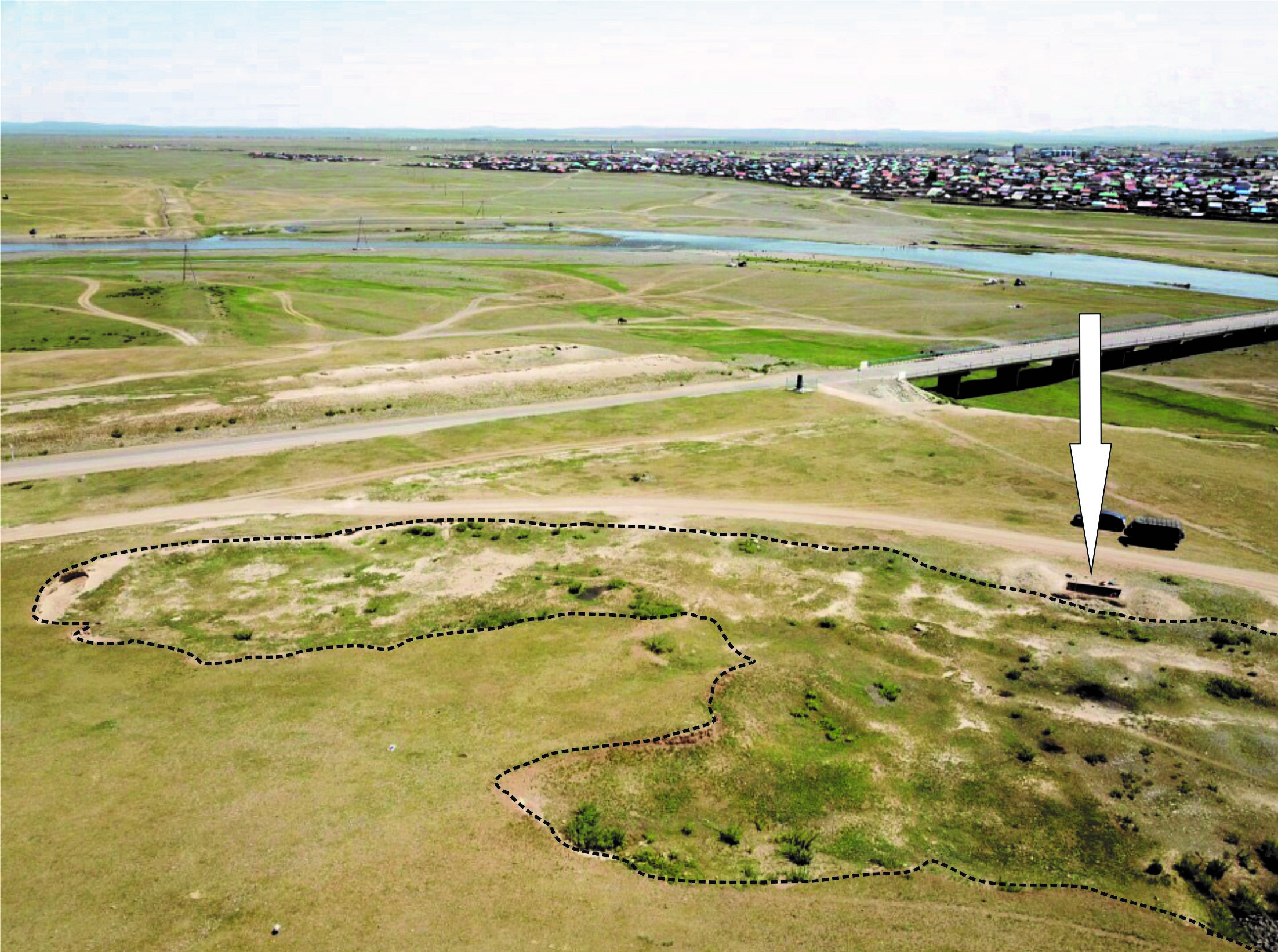
The Moiltyn-am site, near Kharkhorin in the Orkhon Valley
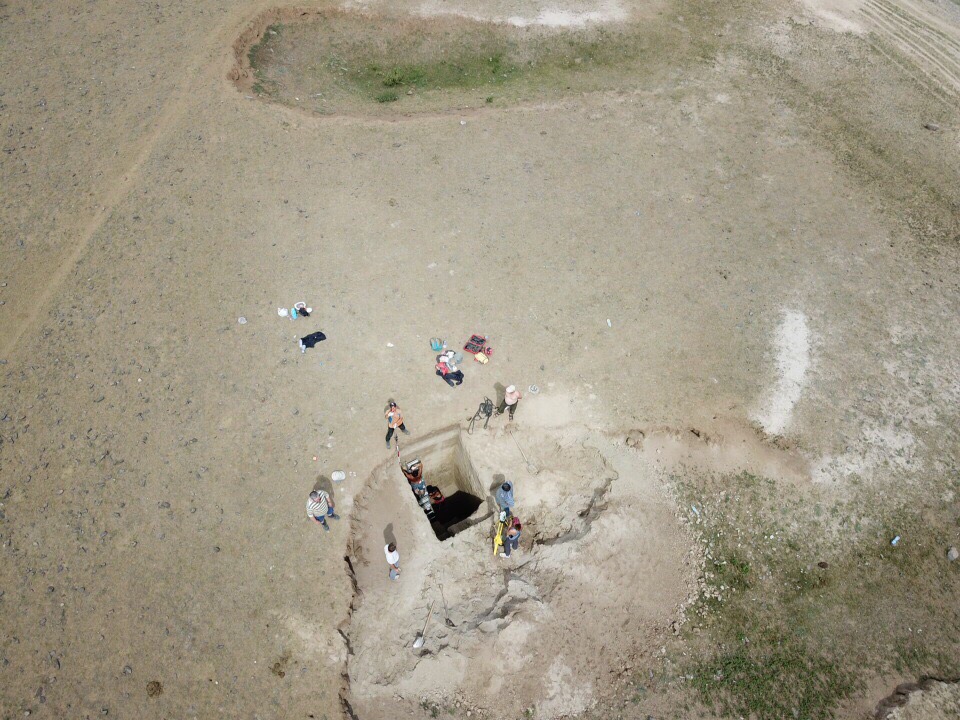
The Orkhon-7 site (2019 test pit and view of earlier excavation unit)
 PaleoMongolia